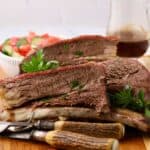
Smoked Beef Short Ribs
These smoked beef short ribs are cooked low and slow on a Big Green Egg or smoker until they develop a rich bark and become tender, juicy, and full of smoky beef flavor.
Servings: 4 servings
Calories: 594kcal
Equipment
- Covered grill or smoker plus fuel, wood for smoking, pink or peach butcher paper, instant-read or leave-in meat thermometer
Ingredients
- 4 pounds Beef Plate Short Ribs or Chuck Short Ribs 1 full plate or rack with 3-4 bones
- 1 tablespoon kosher salt
- 1 tablespoon ground black pepper
- 1 tablespoon garlic powder
- 1 cup beef stock
- 1 tablespoon Worcestershire sauce
- ½ cup apple juice or water
Instructions
- Use a sharp filet knife and trim off most of the fat on the top and any silver skin. Do not remove the membrane on the bottom of the ribs.
- Combine the salt, pepper, and garlic powder and sprinkle generously over all sides of the ribs.
- If you use a Big Green Egg, add a generous layer of charcoal and light the fire. Add several chunks of unsoaked wood, add the platesetter, legs up, the cooking grate, and preheat the Egg to 250°F.
- To set up other grills or smokers, follow the manufacturer's directions for indirect cooking or smoking and preheat to 250°F. Add wood as specified by the manufacturer. The goal is to have a consistent temperature and a steady thin stream of pale bluish-gray smoke.
- Set the rack of beef short ribs on the grate, meat side up. Insert a leave-in meat thermometer into the thickest part of the meat, not touching the bone, and close the lid.
- Combine the beef stock, apple juice, and Worcestershire sauce and place in a spray bottle. Set aside.
- Let your ribs cook for about three hours. Lift the lid and spritz the ribs with the beef stock mixture. Add more charcoal or wood if needed. Plan to spray the meat every hour until it reaches 165°F as measured by your meat thermometer.
- When the meat reaches an internal temperature of 165°F, remove it from the smoker and place it in the middle of a large piece of unwaxed pink butcher paper (about 3 ft x 3 ft). Fold over both the left and right sides of the paper towards the middle. Then tightly fold the meat and paper over and over on itself until it's a nice tight package and completely sealed.
- Place the wrapped ribs back in the smoker, seam side down, and reinsert the meat thermometer. Continue cooking until they reach an internal temperature of 200 to 205°F. Make sure the thermometer is in the thickest part of the meat, not touching the bone.
- Remove the wrapped ribs from the smoker and place them in an insulated cooler to rest for at least one hour before unwrapping and serving.
Video
Notes
- New to smoking? Watch my quick tutorial on "How to set up a Big Green Egg for Smoking" and maintain a steady cooking temperature.
- While your meat is cooking, let the smoke do its magic. Resist the urge to lift the lid and peek. Continually lifting the lid makes it harder to control the temperature. It lets heat and smoke escape, which means your meat will take longer to cook properly.
- Before wrapping, look for dark mahogany bark that doesn't rub off when lightly touched. The bark should look dry and set, not wet or muddy. If the ribs have reached 165°F but the bark isn't fully developed, let them continue cooking unwrapped until they look right.
- While it's pretty easy to find regular single short ribs at the grocery store, most stores don't have plates or racks of beef ribs out for purchase. But many times, they do have them in the back that aren't cut up yet. I usually shop at Publix and have never had a problem getting them. Ask your butcher.
- When purchasing your meat, you can use either beef plate short ribs or a rack of chuck short ribs. Do not use beef back ribs for this recipe; they do not have enough meat to smoke, and the meat they do have will dry out too quickly.
- If you don't have unwaxed butcher paper, you can use aluminum foil. However, it will not allow any more smoke to penetrate the meat. I found my butcher paper on Amazon.
- A good meat thermometer makes all of the difference in cooking meat. It ensures it comes out perfectly cooked every time. Although you can use an instant-read thermometer, a leave-in thermometer works best. It keeps you from having to continually lift the lid to check the temperature.
- We have a Signals BBQ Alarm and Thermometer, which is great. It's a leave-in model that constantly measures the meat's temperature and the grill at the grate. It also connects to my phone via Wi-Fi or Bluetooth, so I can just set it and mostly forget it.
Nutrition
Calories: 594kcal | Carbohydrates: 4g | Protein: 65g | Fat: 34g | Saturated Fat: 14g | Polyunsaturated Fat: 1g | Monounsaturated Fat: 15g | Cholesterol: 195mg | Sodium: 2121mg | Potassium: 1371mg | Fiber: 1g | Sugar: 1g | Vitamin A: 12IU | Vitamin C: 1mg | Calcium: 45mg | Iron: 8mg
