
If you’ve always wanted to smoke brisket but didn’t want to spend the money or commit to an all-day cook, Smoked Chuck Roast is the answer. Often called the poor man’s brisket, chuck roast develops a beautiful bark, a rich, beefy flavor, and tender, juicy slices in about half the time.
Topped with sweet-and-savory bourbon bacon onion jam, it’s a Southern-style barbecue dinner worthy of a special occasion.
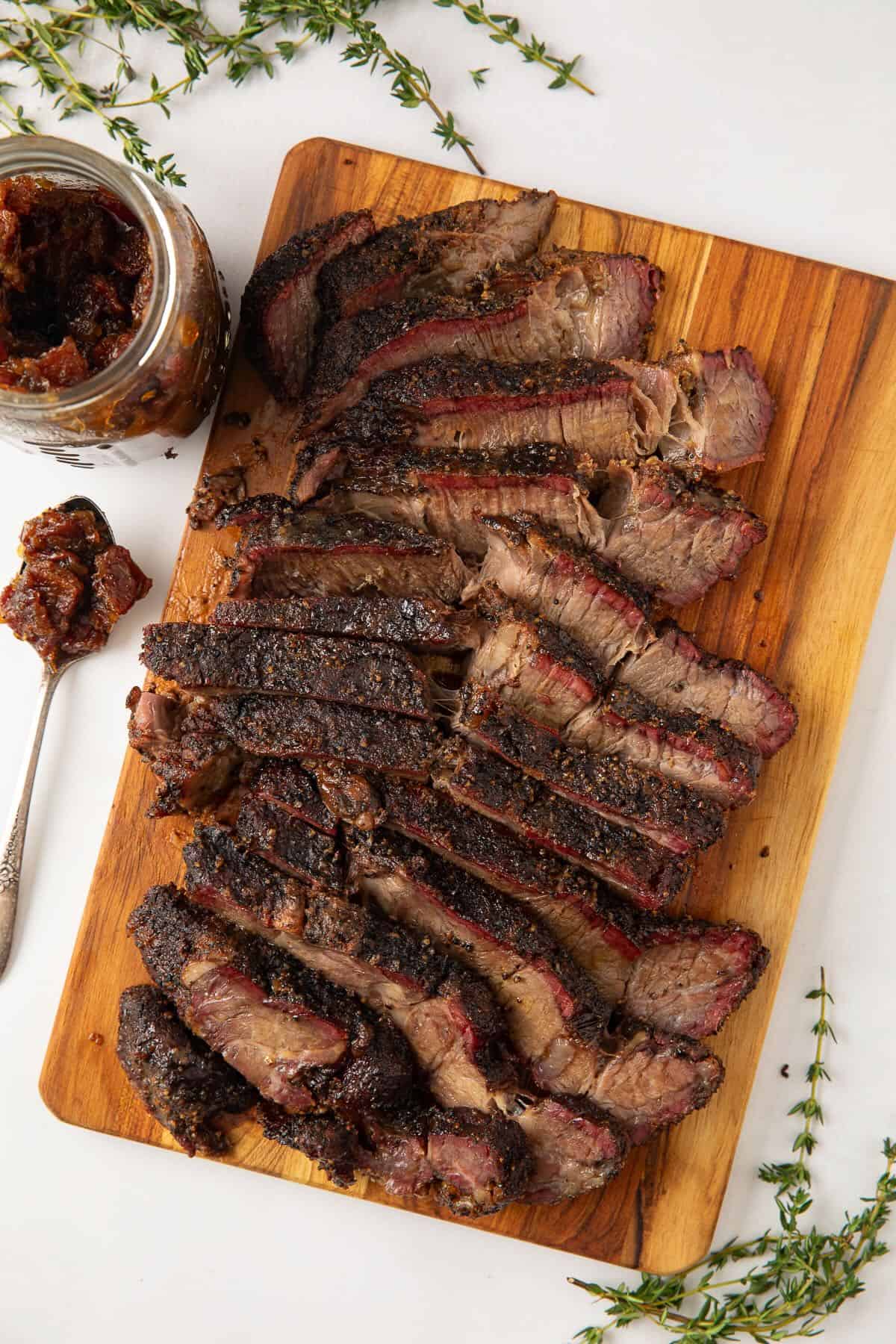
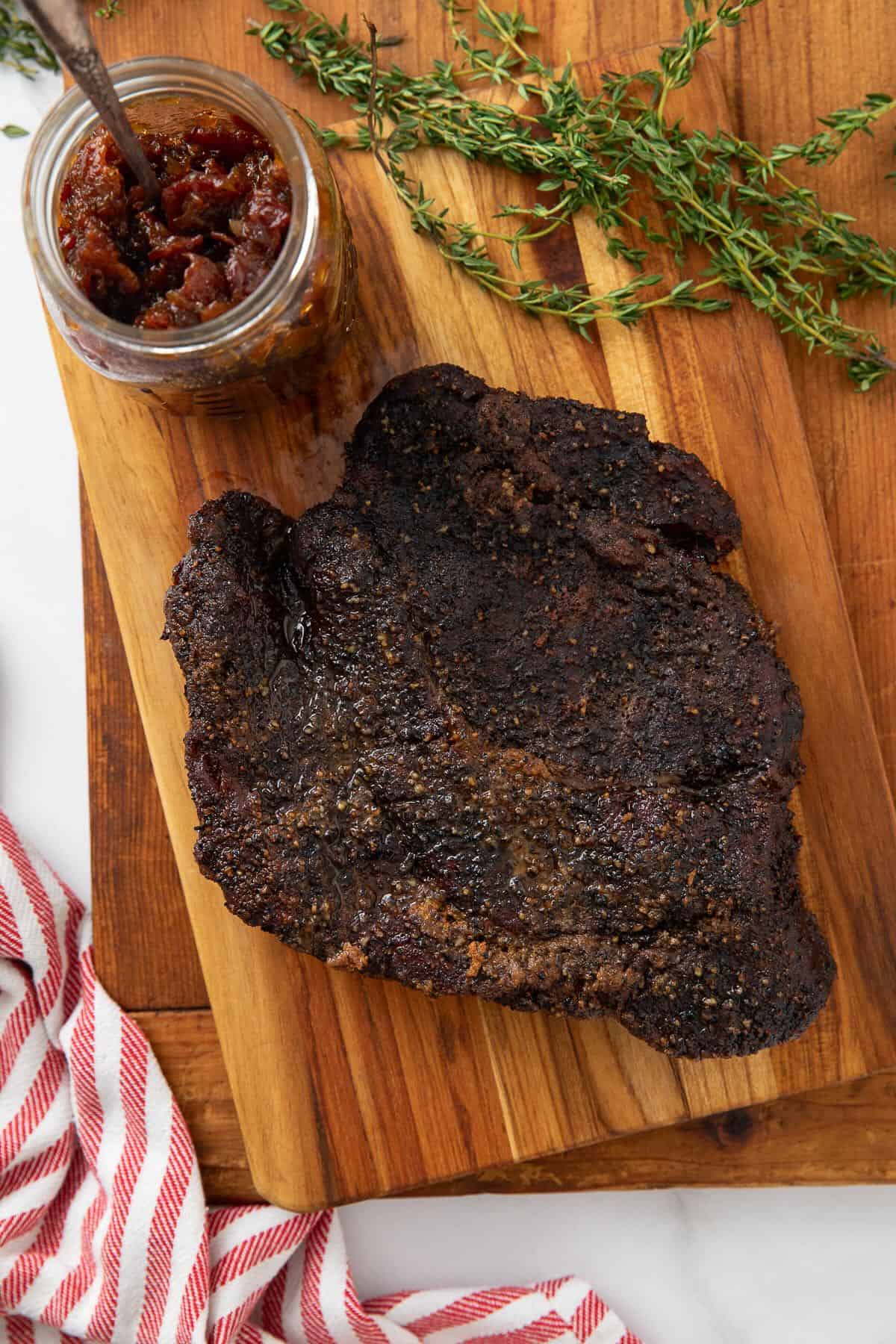
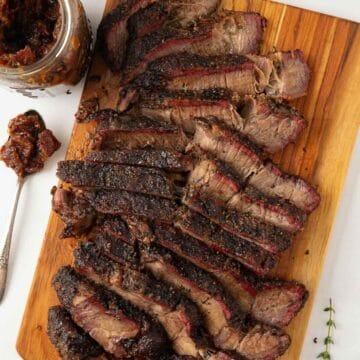
Low and slow smoked chuck roast is one of those recipes that feels like backyard barbecue magic. A humble chuck roast transforms into something remarkably close to brisket, complete with a dark mahogany bark, smoky flavor, and fork-tender beef that practically melts in your mouth.
The first time I tested this recipe, I wasn’t sure a chuck roast could really live up to all the hype. After six hours on my Big Green Egg, one bite answered that question. The beef was smoky and juicy, the coffee-bourbon rub added incredible depth, and the bourbon bacon onion jam took the whole thing over the top.
Even better, my husband and I enjoyed three meals from a single roast. We served it for dinner, then turned the leftovers into roast beef hash and beef stroganoff the next day. That’s my kind of recipe!
Jump to:
- Quick look at the recipe
- Why you’ll love this recipe
- What is smoked chuck roast?
- How to Set Up a Big Green Egg for Smoking
- Ingredient notes and substitutions
- Variations and Flavor Ideas
- From my kitchen
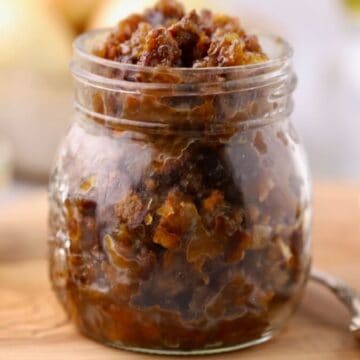
- About the bourbon bacon onion jam
- How to make smoked chuck roast
- Expert tips for success
- What is the stall?
- What to serve with smoked chuck roast
- Storage and reheating
- Can you freeze smoked chuck roast?
- Frequently asked questions
- Final thoughts
- Join the conversation
- More smoker recipes you will love
- Recipe:
Quick look at the recipe
- Recipe style: Southern barbecue
- Difficulty: Moderate
- Cook method: Low and slow smoking
- Prep time: 30 minutes, plus optional overnight dry brine
- Cook time: 6 to 8 hours
- Rest time: 1 hour
- Servings: 6 to 8
- Best wood choices: Oak, pecan, hickory, or cherry
- Target smoker temperature: 225°F
- Target internal temperature: 200°F to 203°F, or until probe tender
Why you’ll love this recipe
- Easier and less expensive than smoking brisket
- Like my smoked beef short ribs, it features a rich beefy flavor with a gorgeous smoke ring
- Coffee-bourbon rub creates an incredible bark
- Bourbon bacon onion jam adds sweet and savory Southern flavor
- Works on pellet smokers, Big Green Eggs, charcoal grills, and gas grills
- Great for entertaining and special occasions
- Leftovers are fantastic
- Can be sliced or shredded
What is smoked chuck roast?
Chuck roast comes from the cow’s shoulder and contains plenty of connective tissue and marbling. When cooked low and slow, those tough tissues gradually break down into rich, flavorful gelatin.
Because it develops a bark, smoke ring, and texture similar to brisket, smoked chuck roast is often called poor man’s brisket. The difference is that it’s generally more affordable, easier to find, and cooks in significantly less time.
How to Set Up a Big Green Egg for Smoking
New to smoking on a Big Green Egg? This quick one-minute video walks you through the setup I use for recipes like this smoked chuck roast, including how to arrange the charcoal and wood chunks, install the ConvEGGtor, and stabilize the temperature at 225°F.
Ingredient notes and substitutions
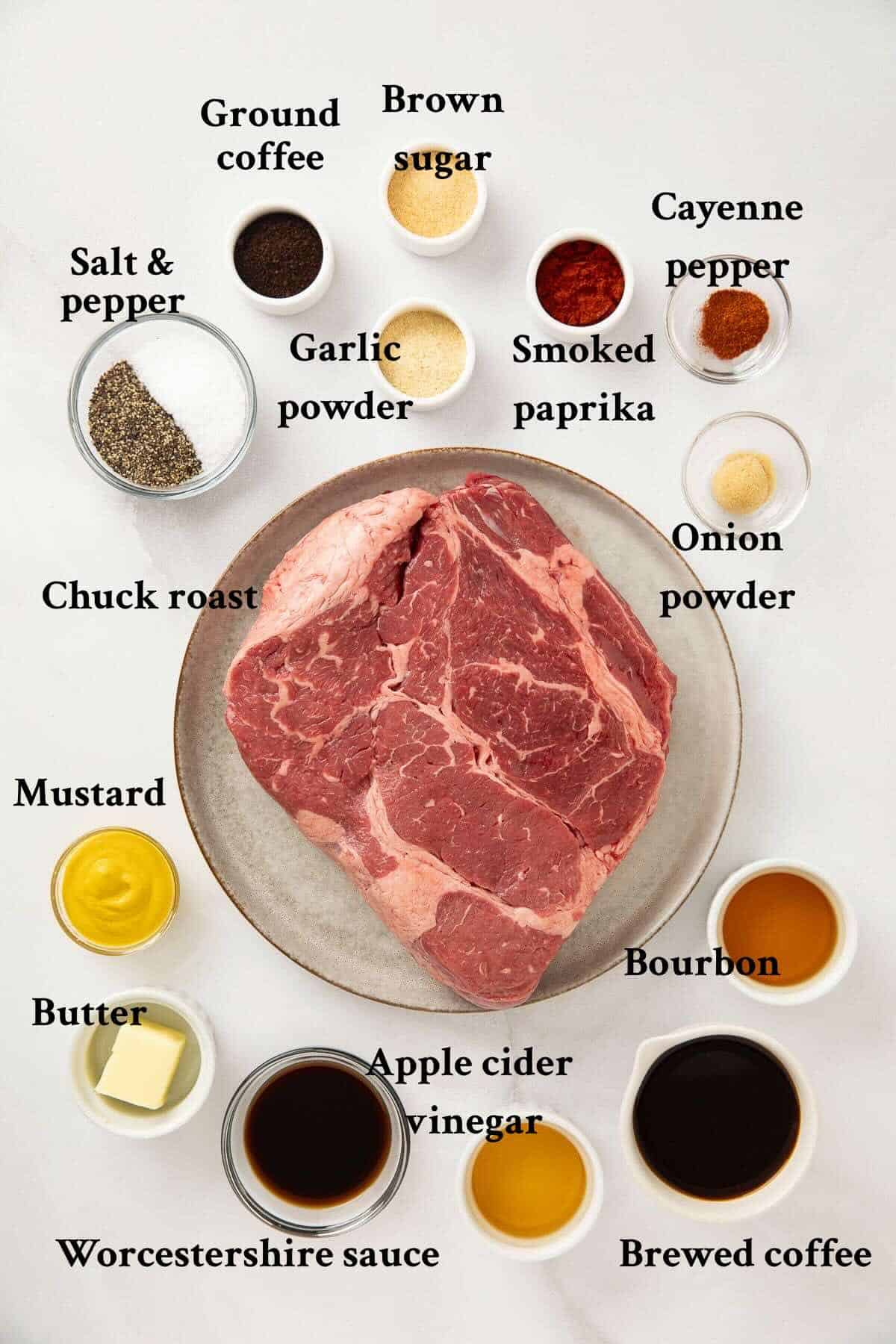
See the recipe card below for full information on ingredients and quantities.
- Chuck roast: Look for a boneless chuck roast weighing 3 to 4 pounds and, if possible, at least 3 inches thick. During testing, I used a roast about 2½ inches thick and found that the thinner end dried out more than the thicker end. If your roast is uneven or thinner than 3 inches, tie it with kitchen twine to create a more uniform thickness and plump it up before smoking.
- Coffee-bourbon rub: Don’t worry if you’re not a coffee lover. The coffee deepens the beefy flavor and helps build bark, but it doesn’t make the roast taste like coffee. In fact, I couldn’t detect any coffee flavor in the finished meat.
- Bourbon: The bourbon adds warmth and complexity to both the spritz and the onion jam. If you prefer not to cook with alcohol, substitute apple juice.
- Bourbon bacon onion jam: This sweet-and-savory topping combines crispy bacon, deeply caramelized onions, bourbon, coffee, and fresh thyme. It’s worth every minute of cooking time, and I like to make it a day ahead.
- Wood: Oak, hickory, or pecan creates bold smoke flavor. I used oak because that’s what we had available, but next time I’d love to try pecan for a more Southern flavor profile.
Variations and Flavor Ideas
- Mississippi-Style Smoked Chuck Roast – skip the coffee elements in the rub and add a packet of au jus mix and a packet of dry ranch seasoning to the dry rub; finish by braising the wrapped roast in a mixture of beef broth, a jar of pepperoncini peppers, and their liquid for a smoky twist on the slow cooker classic
- Smoked Chuck Roast Burnt Ends – once the roast reaches 165°F, slice it into 2-inch cubes instead of wrapping whole; toss the cubes in a mixture of your favorite barbecue sauce and a tablespoon of brown sugar, place in a foil pan, and return to the smoker uncovered at 275°F for another 1 to 1 ½ hours until caramelized and sticky
From my kitchen
A few things surprised me during testing.
- First, the mustard binder completely disappeared. If I hadn’t applied it myself, I never would have known it was there. The overnight dry brine also worked beautifully. By the next morning, the rub had darkened and seemed to become part of the meat rather than sitting on top of it.
- Second, the famous “stall” never really showed up. My roast reached 160°F at about the four-hour mark and kept moving along fairly steadily. Once it was wrapped, however, the temperature climbed more slowly than I expected.
- And finally, probe tenderness really does matter more than temperature. One section of my roast felt like butter, while another area still offered resistance. That’s why I always tell folks to trust the feel of the probe more than the number on the thermometer.
About the bourbon bacon onion jam
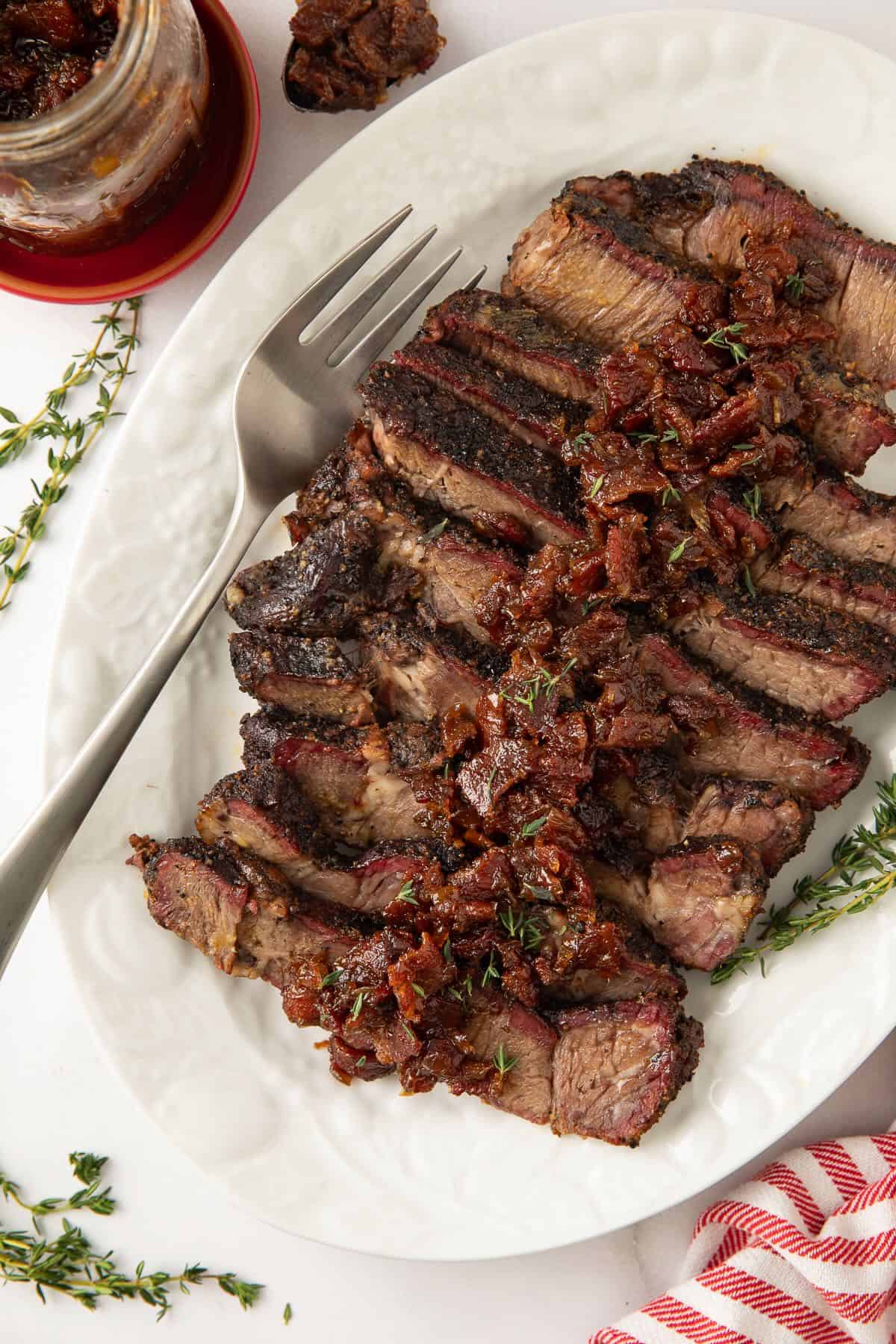
If smoked chuck roast is the star of the show, this bourbon bacon onion jam is the supporting actor that steals every scene.
Sweet onions slowly caramelize in bacon fat until they’re rich, golden, and jammy. Bourbon, balsamic vinegar, coffee, and crispy bacon create a flavor-packed topping that pairs beautifully with smoked beef.
The jam can be made a day ahead, which helps break this recipe into more manageable pieces.
How to make smoked chuck roast
This is a summary of the steps using a Big Green Egg; complete directions, including directions for using a pellet smoker, gas, or charcoal grill, are in the recipe card below.
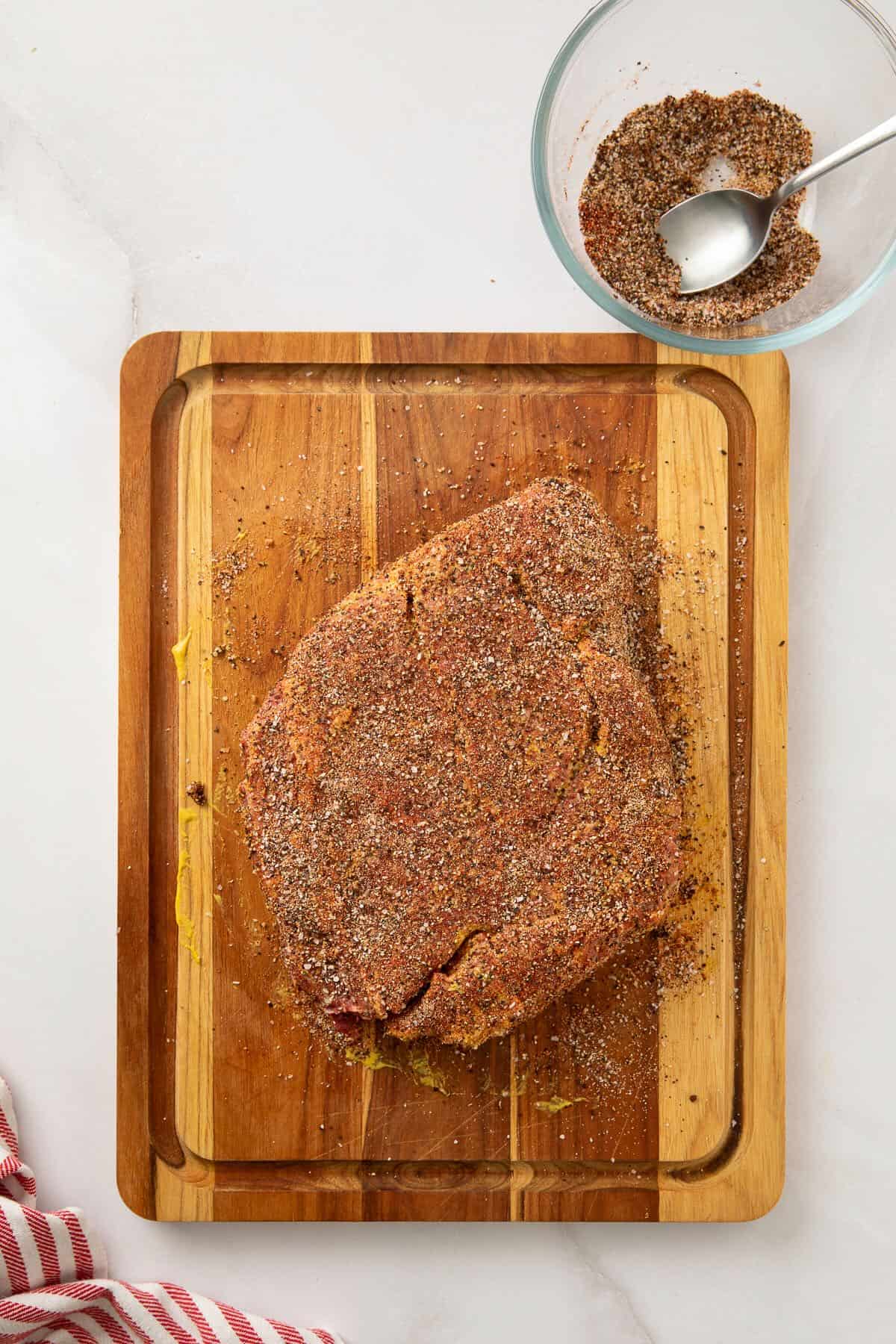
- Dry-brine the roast: Coat the chuck roast with yellow mustard and season it generously with the coffee-bourbon rub.
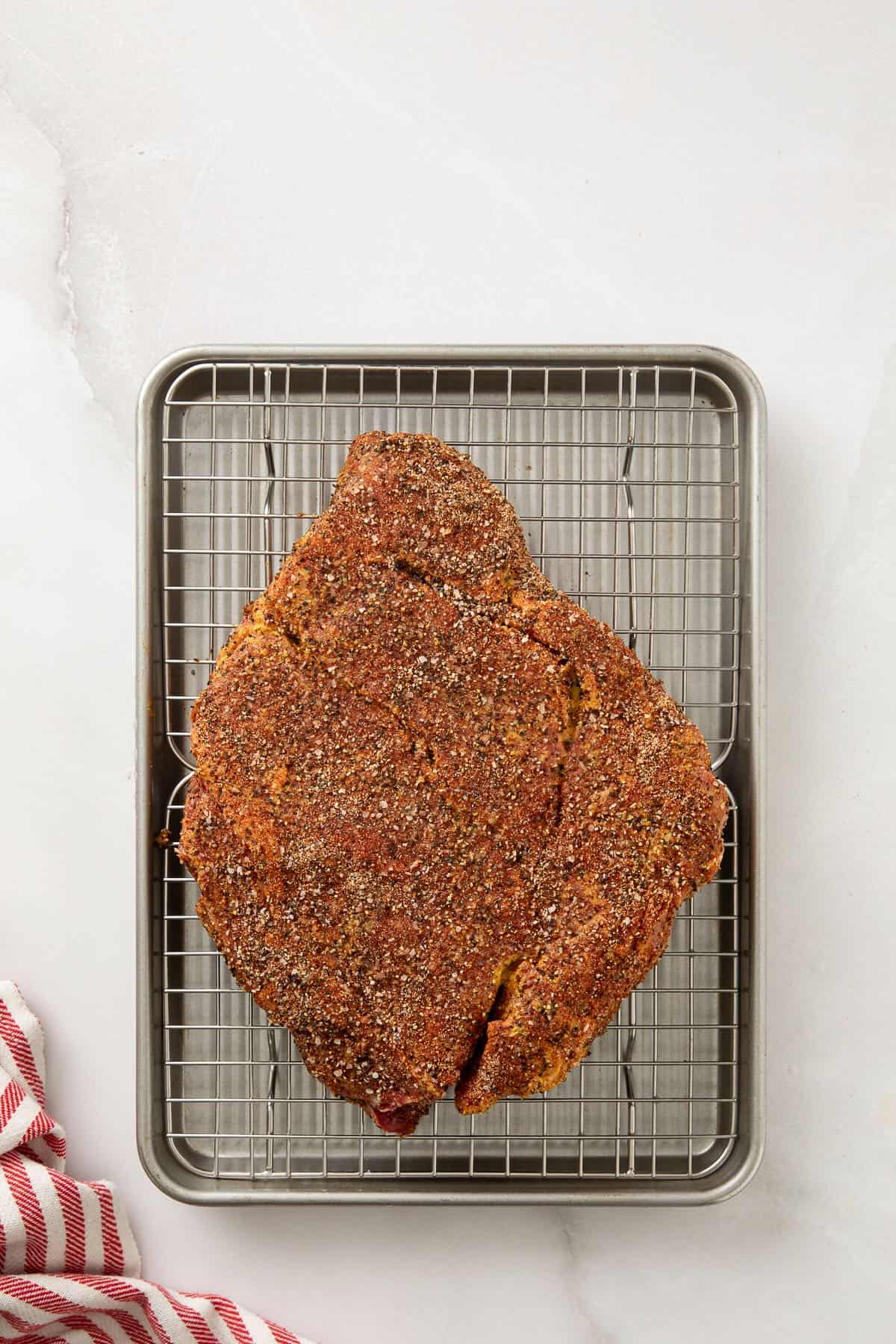
- Refrigerate: Place on a wire rack over a baking sheet and refrigerate uncovered overnight.
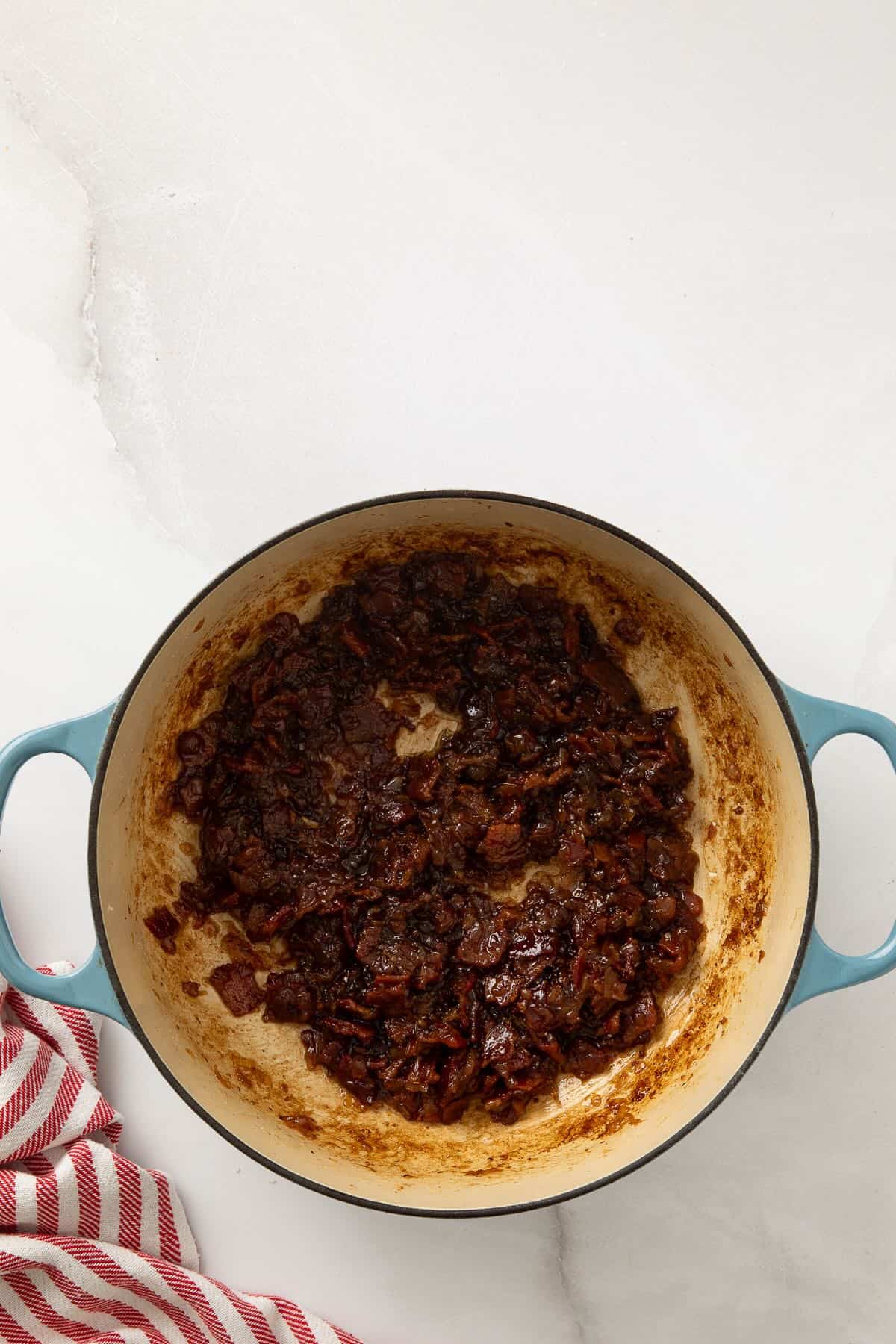
- Make the onion jam: Cook the bacon until crisp. Remove most of the bacon fat, then slowly caramelize the onions until deeply golden and jammy. Add the bacon back along with bourbon, vinegars, coffee, and thyme. Simmer until thick and spoonable.
- Prepare your smoker: Preheat your smoker to 225°F. If using a Big Green Egg, fill the firebox with lump charcoal and add several wood chunks. Install the ConvEGGtor for indirect cooking and allow the temperature to stabilize before adding the meat.
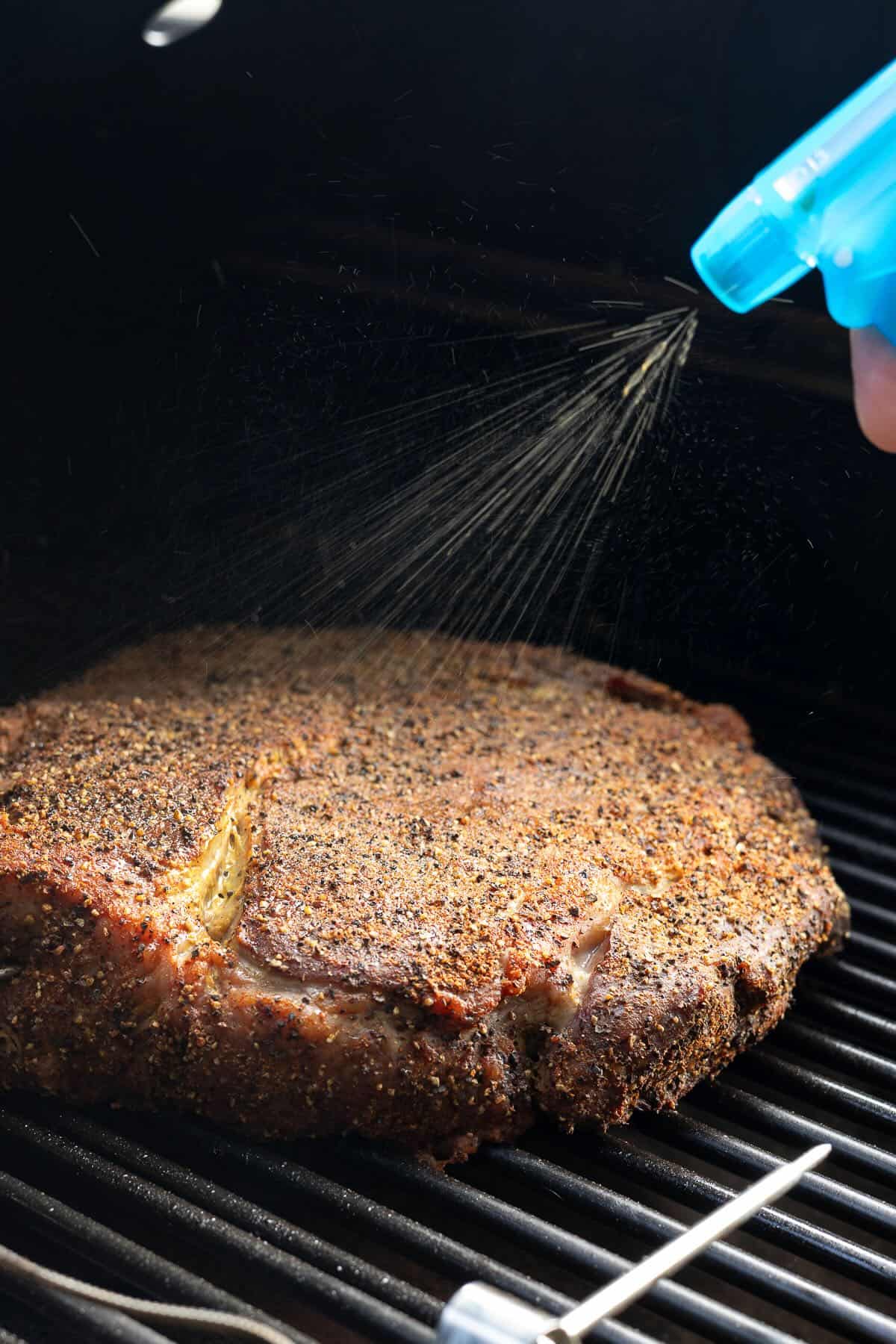
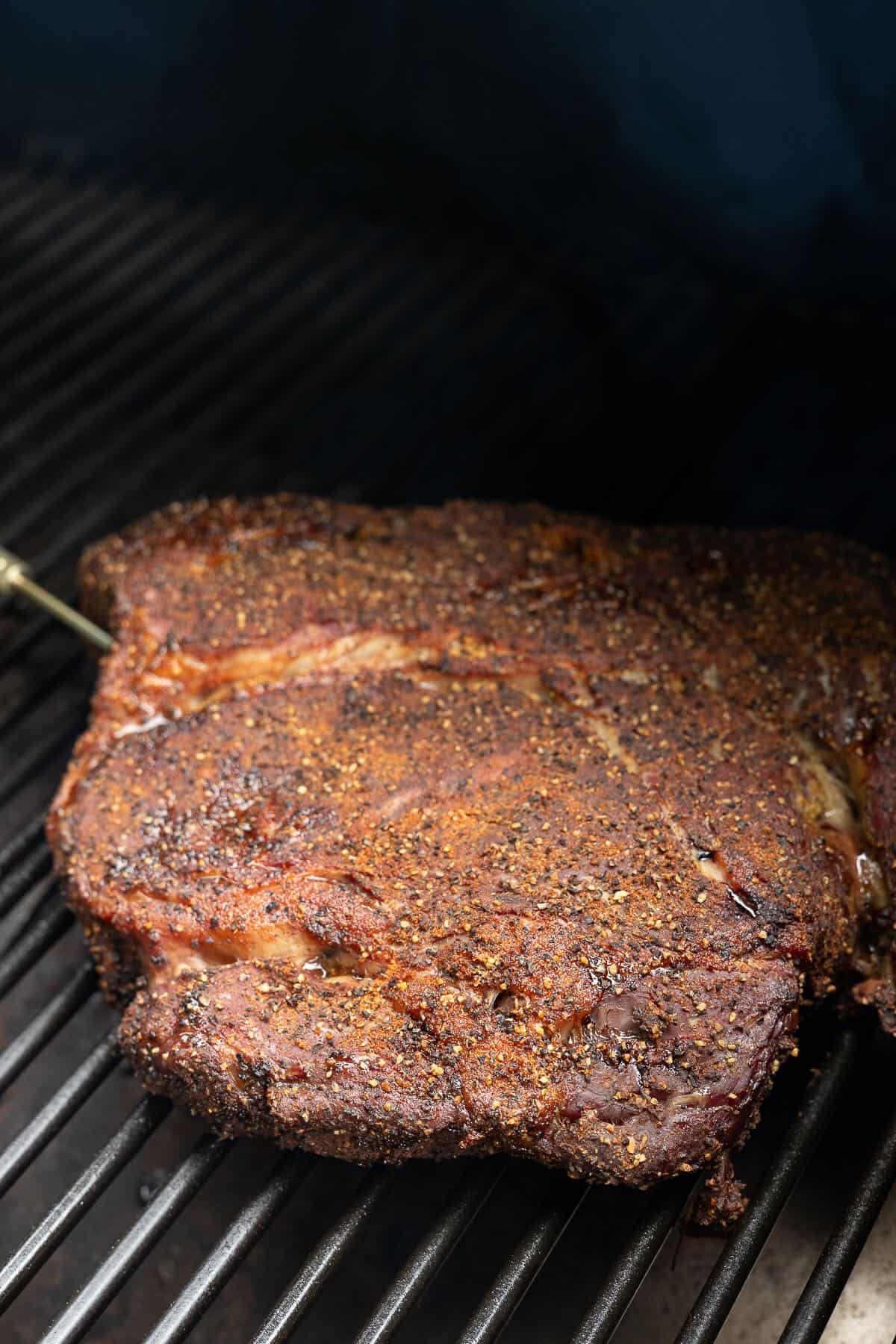
- Smoke the roast: Place the roast directly on the grate and insert a temperature probe. Begin spritzing lightly after the first hour and continue every 45 minutes. Smoke until the internal temperature reaches 160°F to 165°F.
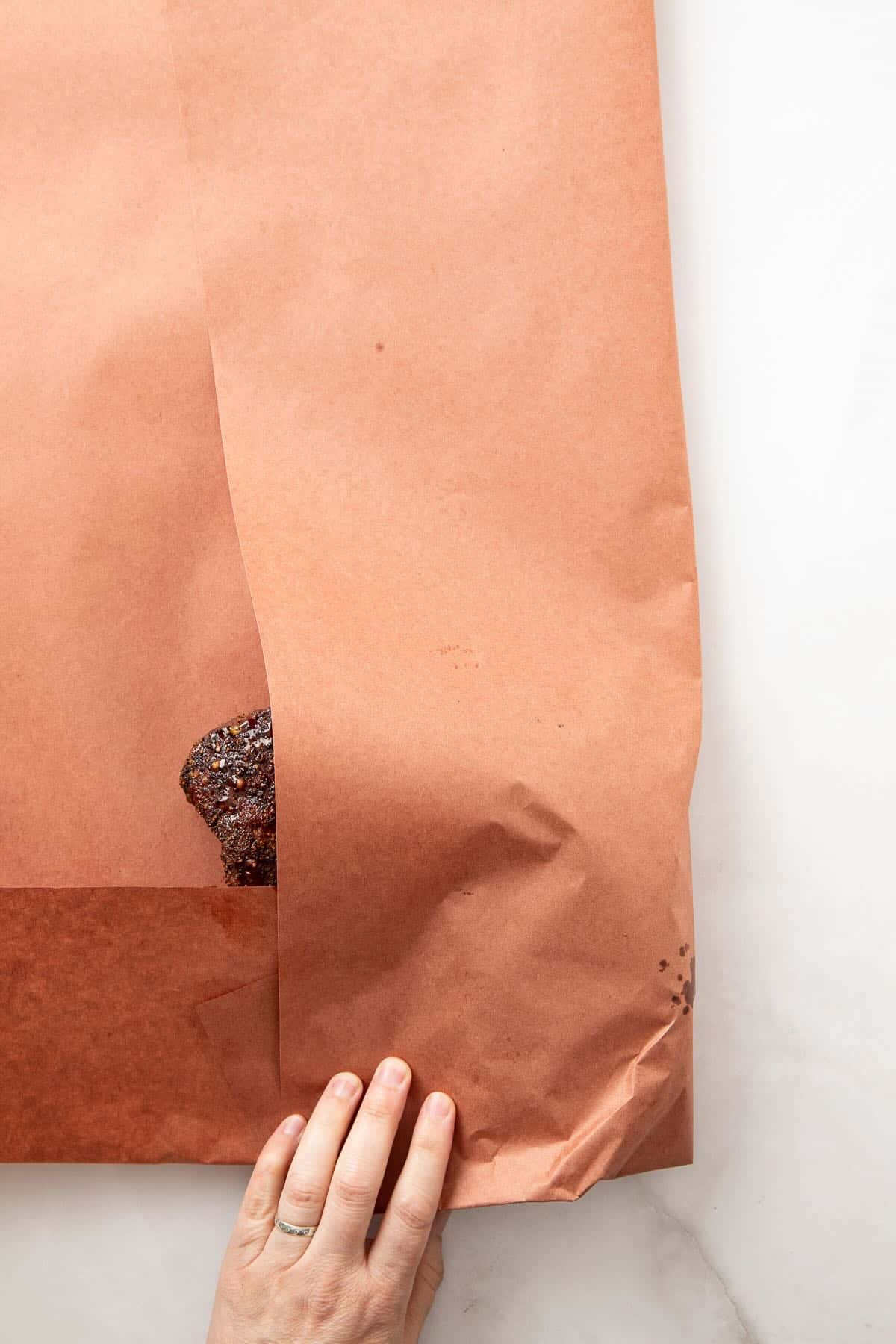
- Wrap: Place the roast on butcher paper and top with butter. Wrap tightly and return to the smoker. Increase the smoker temperature to 250°F.
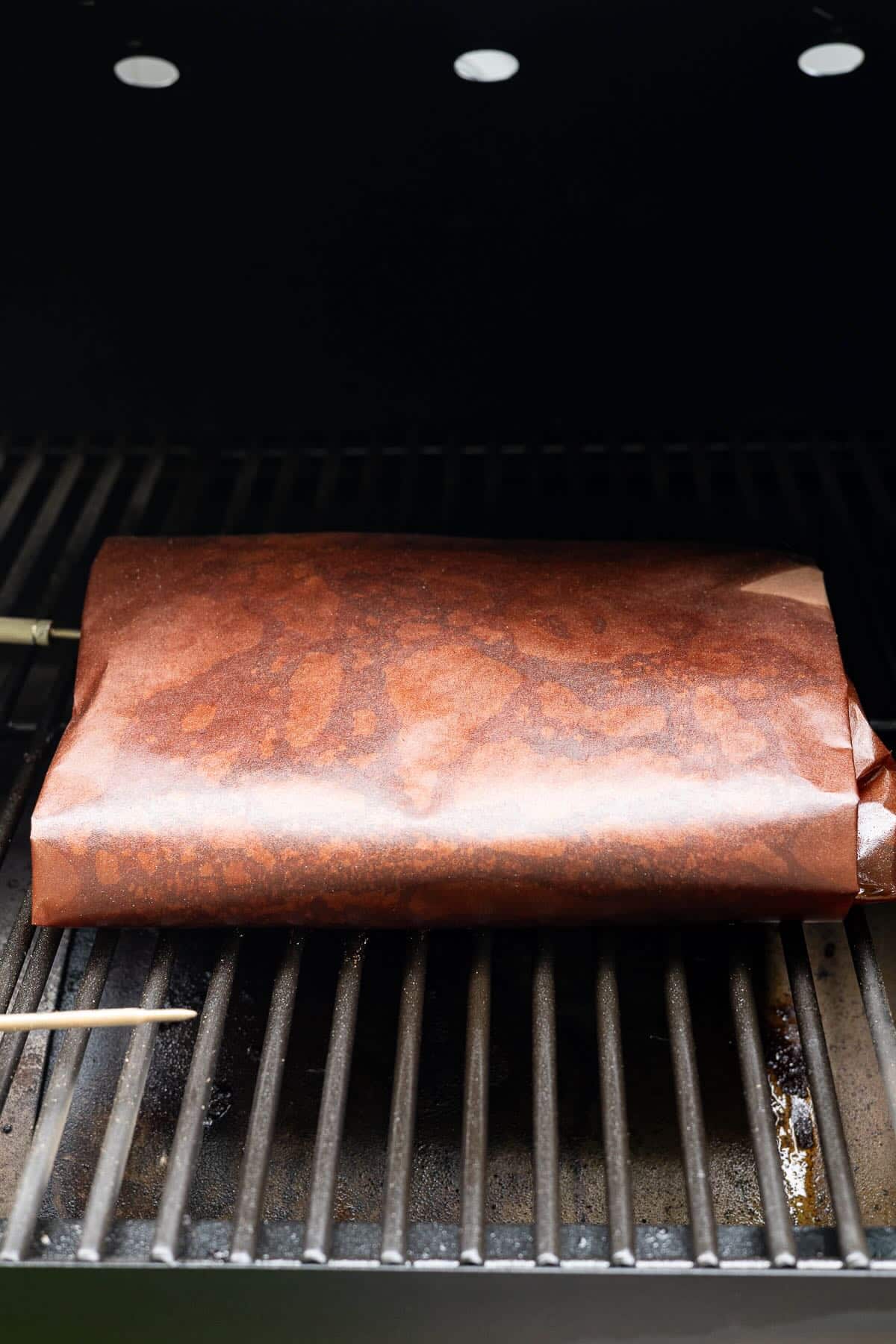
- Finish cooking: Continue cooking until the roast reaches approximately 200°F to 203°F and feels probe tender.
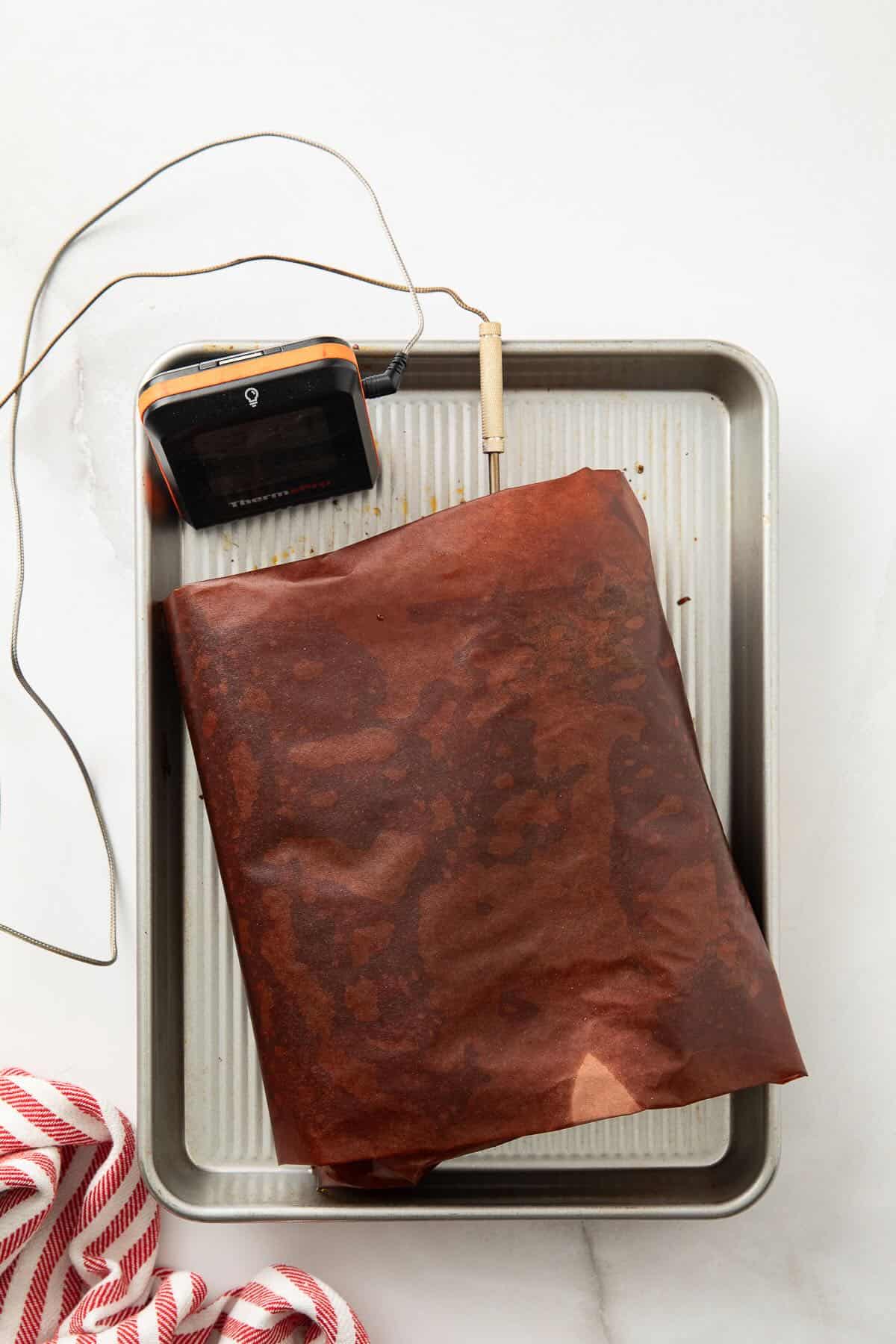
- Rest: Leave the roast wrapped and rest for one full hour. Don’t skip this step.
- Slice and serve: Slice against the grain or shred. Top generously with warmed bourbon bacon onion jam and serve immediately.
Expert tips for success
- Choose the thickest chuck roast available, at least 3 inches thick.
- Dry brine overnight whenever possible.
- Don’t overspray the meat while smoking.
- Trust probe tenderness over temperature, but be careful not to pierce the butcher paper wrap at the bottom, or you will lose your cooking liquid.
- Allow plenty of time for the rest.
- Make the onion jam ahead.
- Save the juices from the butcher paper and spoon them over the sliced beef before serving and storing leftovers.
- Use a quality leave-in meat and grate thermometer.
For this cook, I monitored both the grate temperature and the meat using a ThermoWorks Signals thermometer paired with a Billows temperature-control fan. The Billows maintained a remarkably steady cooking temperature without constant vent adjustments.
What is the stall?
If you’re new to smoking meat, don’t panic when your chuck roast seems stuck around 150°F to 160°F. This is called the stall.
As moisture evaporates from the surface of the meat, it cools the roast at nearly the same rate the smoker is heating it. Eventually, the roast pushes through, and the temperature begins climbing again. Wrapping in butcher paper helps speed things along while preserving the bark.
What to serve with smoked chuck roast
This smoked chuck roast pairs perfectly with:
- Southern potato salad or deviled egg potato salad
- Smoked baked beans
- Old-fashioned American coleslaw or spicy coleslaw
- Oven-baked macaroni and cheese
- Southern homemade creamed corn
- Fried green tomatoes
- Oven-baked Hasselback potatoes
Storage and reheating
- Store leftover roast and onion jam separately in airtight containers in the refrigerator for up to four days.
- To reheat sliced beef, place it in a baking dish with a splash of beef broth, cover tightly with foil, and warm in a 300°F oven until heated through.
Can you freeze smoked chuck roast?
- Yes. Slice or shred the beef before freezing, then store it in freezer-safe containers for up to 3 months.
- The bourbon bacon onion jam can also be frozen separately for up to two months.
Frequently asked questions
No. Chuck roast comes from the shoulder, while brisket comes from the breast section. However, smoked chuck roast can produce a similar flavor and texture.
Absolutely. I tested this recipe on a Big Green Egg, and it produced excellent results.
For best results, choose a chuck roast that’s at least 3 inches thick. During testing, I used a roast closer to 2½ inches thick and found the thinner end cooked faster and dried out more than the thicker section. If your roast tapers significantly, tie it with kitchen twine before smoking to create a more uniform shape.
Generally, when the meat reaches 165°F, it’s time. However, let your bark be your guide. Once the bark is dark and set and the roast is in the stall range, it’s time to wrap.
Yes. In fact, I recommend it. The jam reheats beautifully and makes smoke day much less hectic.
Yes! This recipe was tested on both a pellet smoker and a Big Green Egg, but you can also smoke chuck roast on a gas or charcoal grill using indirect heat and wood chips or chunks. Detailed instructions for all methods are included in the recipe card below.
Final thoughts
If you’ve been intimidated by brisket or simply don’t want to spend brisket money, smoked chuck roast is one of the most rewarding cooks you can make. The combination of smoky beef, rich bark, and sweet-savory bourbon bacon onion jam delivers big barbecue flavor without requiring a massive cut of meat.
And if you’re lucky enough to have leftovers, don’t be surprised when you’re already planning your next chuck roast before you’ve finished the first one.
Join the conversation
Have you made this smoked chuck roast? I’d love to hear how it turned out. Did you use a pellet smoker, Big Green Egg, or another setup? Leave a comment and star rating to let me know!
More smoker recipes you will love
If firing up the smoker is your idea of a good day, don’t stop with this smoked chuck roast. Here are a few more of my favorite smoker recipes that are guaranteed to impress family and friends.
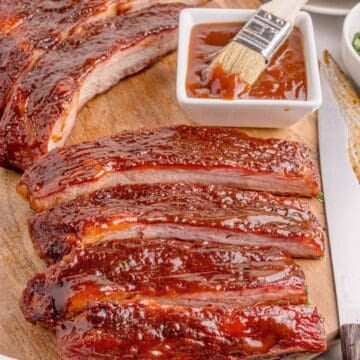
Looking for more smoking ideas, here is a link to all of my smoking and grilling recipes.
Southern Comfort with a Side of Simplicity
For over a decade, Grits and Pinecones has been serving up delicious recipes with a Southern flair-simple, flavorful, and perfect to share with family and friends
Recipe:
Want to Save This Recipe?
Enter your email & I’ll send it to your inbox. Plus, get great new recipes from me every week!
By submitting this form, you consent to receive emails from Grits and Pinecones.
Southern Smoked Chuck Roast with Bourbon Bacon Onion Jam
Equipment
- Smoker, fuel, and wood for smoking See notes below
- Uncoated butcher paper
- A leave-in meat and grate thermometer
Ingredients
BOURBON COFFEE DRY RUB
- 2 tablespoons kosher salt or 1 tablespoon table salt
- 2 tablespoons coarse ground black pepper
- 1 tablespoon garlic powder
- 1 tablespoon onion powder
- 1 tablespoon smoked paprika
- 1 tablespoon finely ground dark roast coffee
- 1 teaspoon brown sugar
- ½ teaspoon cayenne pepper
BOURBON COFFEE SPRITZ
- ½ cup strong brewed coffee cooled
- ¼ cup bourbon
- 2 tablespoons Worcestershire sauce
- ¼ cup apple cider vinegar
SMOKED CHUCK ROAST
- 1 boneless chuck roast 3 to 4 pounds, recommend 3 inches thick
- 2 tablespoons yellow mustard binder
- 2 tablespoons salted butter for wrapping
BOURBON BACON ONION JAM
- 1 pound thick-cut bacon cut into ½-inch pieces (plain, maple or applewood)
- 2 large yellow onions finely chopped (about 3 cups)
- ¼ cup packed brown sugar
- 4 tablespoons bourbon divided
- 2 tablespoons balsamic vinegar
- 2 teaspoons apple cider vinegar
- 1 tablespoon strong brewed coffee
- 3 to 4 sprigs fresh thyme
- ½ teaspoon kosher salt or heaping ¼ teaspoon table salt, or to taste
- ½ teaspoon freshly cracked black pepper or to taste
- ¼ cup water plus more as needed
Instructions
DRY BRINE (OPTIONAL BUT RECOMMENDED)
- Mix together all of the dry rub ingredients in a small bowl and stir until well combined. Coat the chuck roast all over with the yellow mustard, using your hands or a pastry brush to spread it into a thin, even layer. This acts as a binder and disappears completely during the cook; you will not taste it.
- Sprinkle the dry rub generously over all sides of the roast, pressing it in lightly so it adheres. You want an even coating, but not so thick that you cannot see any of the meat underneath. Too heavy a coat will block the smoke from penetrating and can prevent bark from forming properly.
- Place the seasoned roast on a wire rack set over a rimmed baking sheet and refrigerate, uncovered, for 8 hours or overnight (max 24 hours). If you are short on time, let it sit at room temperature for at least 30 minutes before smoking.
MAKE THE BOURBON BACON ONION JAM
- This jam can be made a day ahead and reheated, which frees up your time on smoke day. Add the bacon pieces to a large, heavy-bottomed skillet or Dutch oven over medium-low heat. Cook, stirring occasionally, until the fat has fully rendered and the bacon is deeply crisp, about 30 to 35 minutes. You want the pieces genuinely crispy here, because they will soften slightly once they go back into the jam. Transfer the bacon to a paper towel-lined plate and pour off all but 2 to 3 tablespoons of the bacon fat from the pan.
- Add the chopped onions to the pan with the reserved bacon fat and cook over medium-low heat, stirring every 5 to 10 minutes, for about 8-10 minutes until they begin to soften. Add the brown sugar and stir to combine. Continue cooking, stirring occasionally, for another 50 to 60 minutes until the onions are deeply golden, jammy, and reduced. Do not rush this step by turning up the heat; low and slow is what turns onions into something magical.
- Add the crispy bacon back to the pan along with 3 tablespoons of the bourbon, the balsamic vinegar, apple cider vinegar, coffee, and thyme sprigs. Stir everything together and cook for another 10 to 15 minutes, stirring occasionally, until the liquid has mostly cooked down. Add the water and the remaining 1 tablespoon of bourbon, stir to combine, and cook for 5 more minutes. Remove and discard the thyme sprigs. Season with salt and freshly cracked pepper to taste. The jam should be thick and spoonable. If it tightens up too much as it sits, stir in another tablespoon or two of water. Makes approximately 1 ½ cups.
SMOKE THE CHUCK ROAST
- Combine all of the spritz ingredients in a clean spray bottle, shake gently to mix, and set aside.
- Get your pellet smoker started with the lid open. Then close the lid and heat to 225°F for 15 minutes. Oak, hickory, or pecan wood pellets all work well here. Cherry adds a sweeter smoke if you prefer a milder flavor.
- Place the chuck roast directly on the grill grate. Insert a leave-in wireless thermometer probe into the thickest part of the roast, making sure it is not touching fat or resting against the grate. Close the lid.
- After the first hour, begin spritzing the roast lightly with the bourbon coffee spritz about every 45 minutes. Do not overdo it. A light mist is all you need. The goal is to keep the surface from drying out too fast while still allowing the bark to build. Don't leave the lid open any longer than necessary.
- Smoke the roast at 225°F until the internal temperature reaches 160°F to 165°F, which will take approximately 3 to 4 hours depending on the size and shape of your roast. At this point you will see a dark, mahogany crust forming on the outside. This is the bark, and it is exactly what you are after.
WRAP AND FINISH
- The temperature stall on chuck roast often hits right in the 150°F to 160°F window and it can feel like nothing is happening for a long stretch. If you have time, wait it out. The stall will break on its own, usually within 1 to 2 hours, and the bark will be even better for it. If the roast is at least 155°F, you can wrap it early to save time. The butcher paper will trap heat and help push through the stall faster without steaming the bark.
- Lay out a large piece of uncoated butcher paper on a clean work surface. If you are using 24″ wide paper, pull a generous length of about 24 to 30 inches and one layer is sufficient as long as your wrap is snug. If you are using 18″ wide paper, pull about 36 inches and use two overlapping sheets or fold and wrap in two layers to make sure you have enough paper to seal the roast completely without fighting the edges.
- Remove the roast from the smoker and place it towards one end of the butcher paper. Increase the smoker temperature to 250°F while you wrap the roast. Slice the 2 tablespoons of salted butter and add it on top of the roast. To wrap, fold the nearest narrow end over the roast. Then fold both sides over the tip, overlapping in the center. Roll the roast once and tug on it to tighten the folds. Leaving the width of the roast plus an inch or two of remaining paper, trim off the excess. Fold the end over about an inch or two to help contain juices. Roll the roast one more time.
- Place the wrapped roast back on the smoker seam side down so the weight of the roast holds everything closed. Continue cooking until the internal temperature reaches 200°F to 203°F and the roast feels probe tender when you test it.
- If the roast reaches 200°F but isn't probe tender, continue checking on it every 15-20 minutes. If the roast never feels probe tender, remove from the smoker at 215°F anyway.
REST
- Remove the roast from the smoker and do not unwrap it. Set it on a baking sheet or cutting board and let it rest, still wrapped, for a full 60 minutes before slicing. This step is not optional. During the rest, the internal temperature will continue to rise slightly and then slowly drop as the juices redistribute back into the meat. Cutting into it too early will cause those juices to run out onto your board instead of staying in every bite.
SERVE
- Carefully unwrap the roast, preserving the meat juice for serving. Slice against the grain into ½-inch thick slices, or pull it apart with two forks if you prefer a shredded style. Arrange on a serving platter and spoon a touch of reserved meat juice over the slices. Top generously with warm bourbon bacon onion jam. Serve extra jam alongside for the table.
Notes
- Yellow mustard (binder) – olive oil, mayonnaise, or Dijon mustard work equally well as a binder
- Bourbon (spritz and jam) – apple juice makes a good alcohol-free swap in both; the flavor will be sweeter and lighter
- Thick-cut bacon – regular-cut bacon can be used, but will crisp up faster; watch it closely so it does not burn during rendering
- Brown sugar (rub) – coconut sugar or omit entirely for a less sweet bark
- Smoked paprika – regular sweet paprika works; add an extra pinch of cayenne to compensate for the lost depth
- Fresh thyme (jam) – ¼ teaspoon dried thyme can be substituted; add it with the onions rather than at the end


Sharon Rigsby
Wow, no lie, this recipe takes a bit of work, but the results are totally worth it! Pure smoked beefy flavor!